
What the 3-3-3 Rule Is—and Why It’s a Fundamental Guideline in Fostering
- Jacquelyn Adams
- Apr 26
- 4 min read

When Boba First Came Home
When Boba first came to my home from the shelter, she was shaking.
She wouldn’t explore. She wouldn’t make eye contact. She mostly just curled up, trying to make herself small.
It would’ve been easy to think, “Is this just her personality?” But it wasn’t.
She had just come out of the shelter—overstimulated, unsure, and trying to figure out if she was safe.
So instead of pushing her to “adjust,” I gave her space.Kept things quiet. Predictable. Low pressure.
And over the next few days… things started to shift.
That experience is exactly why the 3-3-3 Rule matters.
What the 3-3-3 Rule Actually Is
You’ve probably heard it:

3 days. 3 weeks. 3 months.
It’s one of the most widely shared frameworks in the rescue world—but also one of the most misunderstood.
The biggest mistake people make is treating it like a guarantee.
It’s not.
The 3-3-3 Rule isn’t a strict timeline or a checklist—it’s a guide. A simple, experience-based way to understand how many dogs adjust to a new environment.
Because dogs aren’t robots. They don’t follow a schedule.
What this framework does is help you interpret what you’re seeing—so you can respond in a way that actually supports the dog in front of you.
Why This Guideline Matters So Much
1. It Prevents Mislabeling Dogs
A quiet dog in the first few days might seem “low energy.” A week later, they’re bouncing off the walls.
Nothing changed—they just finally felt safe enough to show it.
2. It Reduces Frustration (And Failed Placements)
When you expect instant adjustment, it’s easy to feel like something is wrong.
The 3-3-3 Rule replaces that with understanding—and that patience is often what keeps a dog in a home long enough to truly settle.
3. It Helps You Build Trust the Right Way
Trust isn’t forced. It’s built through consistency, safety, and time.
This framework gives you a roadmap for that.
4. It Keeps People—And Dogs—Safer
A stressed dog is more likely to react, especially in the early days.
Giving space, avoiding overwhelming interactions, and respecting their adjustment period isn’t just kind—it’s critical for safety.
What This Looks Like in Real Life
First 3 Days: “Am I Safe?” (Decompression Phase)
What you might see:
Shaking, hiding, or shutting down
Pacing, panting, or clinging
Little interest in food or interaction
What to focus on:
Keep their world small and calm
Stick to a simple, predictable routine
Limit visitors, noise, and stimulation
Let them come to you—don’t force connection
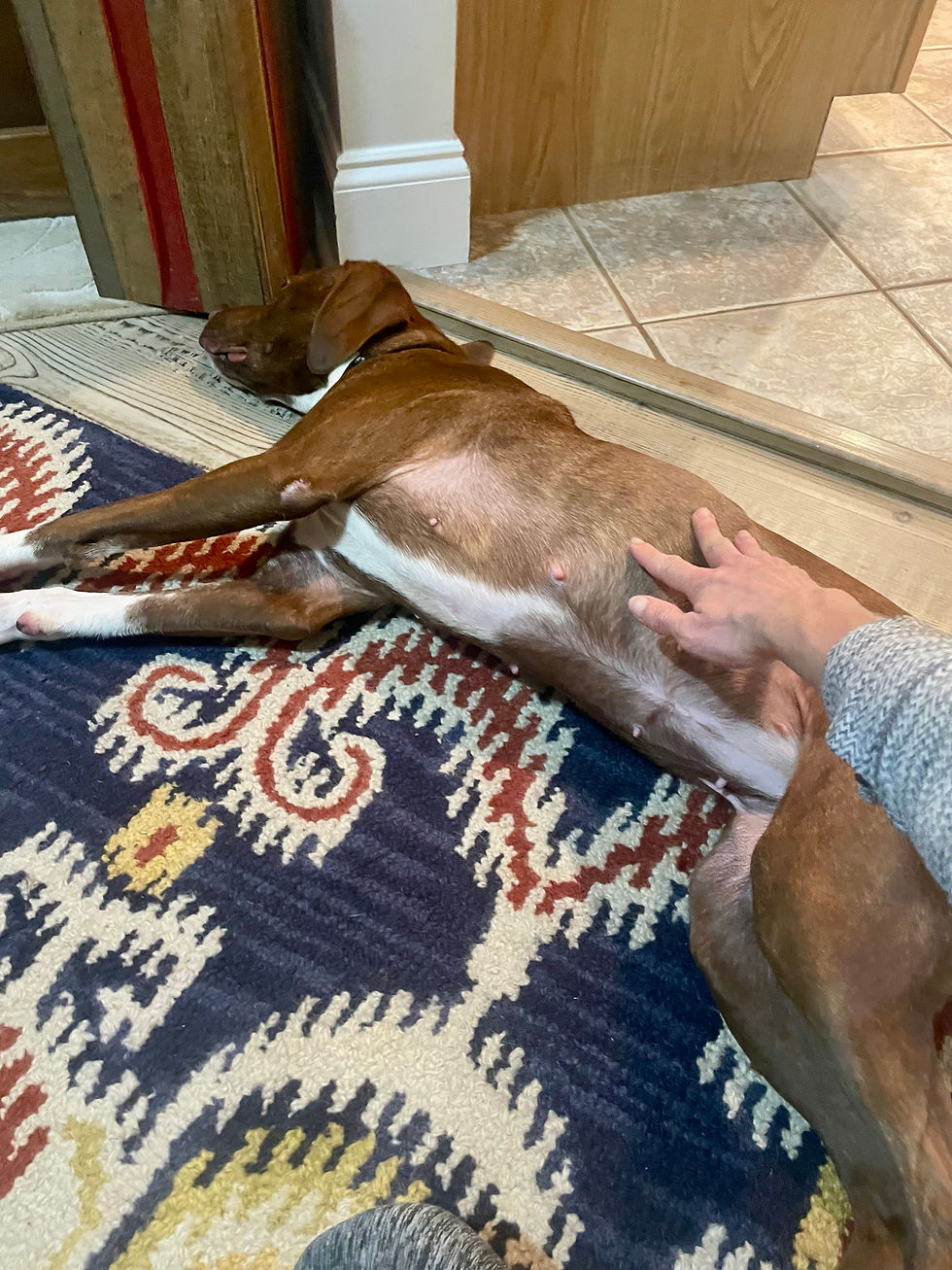
Just like Boba, some dogs won’t leave their safe space at first. The instinct is to encourage them out—but often, the best thing you can do is less. Sit nearby. Stay calm. Let them adjust on their terms.
First 3 Weeks: “What Are the Rules?” (Learning the Routine Phase)
What you might see:
More energy—or new behaviors like barking or chewing
Accidents in the house
Boundary testing or mild reactivity
What to focus on:
Introduce gentle structure (consistent walks, feeding times)
Start basic training (sit, come, name recognition)
Add enrichment (sniff walks, puzzle toys)
Reward the behaviors you want to see
A dog who seemed “calm” at first suddenly starts jumping or mouthing. This isn’t regression—it’s confidence. They’re learning, and now you can guide them.
First 3 Months: “I Think This Is Home” (Settling-In Phase)
What you might see:

Relaxed body language
Seeking out affection or connection
Playfulness and curiosity
What to focus on:
Gradually expand their world (new walks, short outings)
Introduce new people and environments thoughtfully
Continue training and confidence-building
Strengthen the bond through consistency
A Few Things to Keep in Mind
These are guidelines—not deadlines. Some dogs move faster. Others need more time, especially if they’ve experienced trauma or long shelter stays.
You’re not seeing the dog—you’re seeing the adjustment. What you see early on isn’t the full picture.
Go slow now so you can go far later. Rushing the process often creates more setbacks than progress.
Avoid doing too much, too soon. (Think: busy outings, lots of new people, overwhelming environments in the early days.)
The Bottom Line
The 3-3-3 Rule works because it changes how you interpret behavior.
It turns:
confusion → clarity
frustration → patience
guesswork → intentional support
And when you understand what a dog is going through… you show up differently.
The dog you meet on day one isn’t the dog they’ll be in a few weeks—or a few months.
But if you give them the space, structure, and support they need to get there… you get to watch that transformation unfold.
And that’s where the magic of fostering really lives. 🐾
And Sometimes… You Get to See the Full Transformation
Boba is a perfect example of this.
When she first came in, she wasn’t sure about anything—especially people. Even simple things like being pet felt like too much.
But over time, with patience and a little consistency, that started to change.
First, she learned to trust.Then she started leaning into pets.And eventually… she was running around the backyard, playing and just being a dog.
Not long after that, she found her family.
And that’s the part that’s easy to forget:this is what you’re making possible.
If You Want to Go a Little Deeper
If you’re thinking about fostering—or just want a better sense of what to expect—I share more in my podcast, Dog Fostering 101. In this episode, I walk through how dogs adjust over time and what can help make that transition smoother for both of you.
🎧 Listen here: The 3-3-3 Rule: Helping Your Foster Dog Adjust



Comments